Introduction
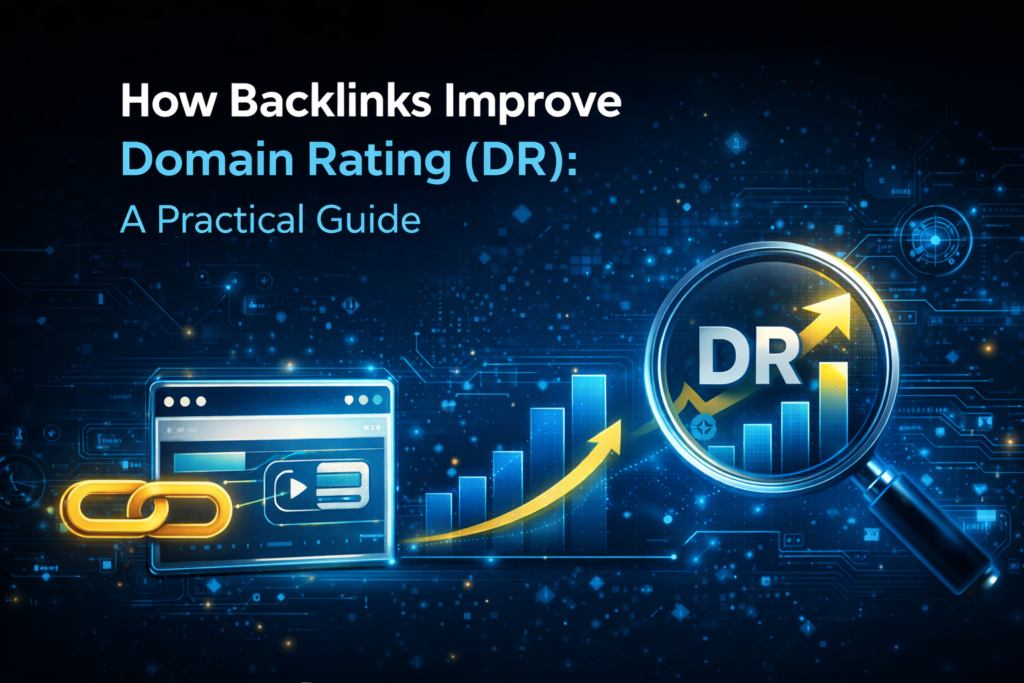
Domain Rating (DR) is a metric that shows the strength of your website’s backlink profile. It is commonly measured by tools like Ahrefs.
Many beginners believe that creating more backlinks automatically increases DR. This is incorrect. DR improves only when your website earns high-quality, relevant, and authoritative backlinks.
This guide explains how backlinks actually influence DR and what you should do to improve it.
What is Domain Rating (DR)
Domain Rating is a score from 0 to 100 that measures the strength of your website’s backlink profile.
It is based on:
- Number of referring domains
- Authority of linking websites
- Quality and relevance of backlinks
Important point:
DR is not a Google ranking factor, but it reflects your overall link authority, which indirectly impacts rankings.
How Backlinks Improve Domain Rating
- High Authority Links Pass More Value
Backlinks from high-authority websites contribute more to your DR.
Examples:
Established blogs
News websites
Niche authority sites
One strong backlink can be more valuable than 50 weak ones.
2. Referring Domains Matter More Than Quantity
Getting links from different websites is more powerful than getting multiple links from the same site.
For example:
- 10 backlinks from 10 websites = strong signal
- 10 backlinks from 1 website = weak signal
Focus on increasing unique referring domains.
3. Link Equity Distribution
When a high-DR website links to you, it passes “link equity.”
This equity strengthens your domain’s overall authority.
However:
- If that website links to too many sites, the value passed is reduced
- Contextual links (within content) pass more value than footer or sidebar links
4. Relevance of Backlinks
Backlinks from relevant websites improve DR more effectively.
Example:
- SEO blog linking to your SEO website = strong
- unrelated niche linking = weaker impact
Search engines and tools value topical relevance.
5. Dofollow vs Nofollow Links
Only dofollow backlinks significantly contribute to DR.
- Dofollow links pass authority
- Nofollow links do not pass strong link equity
However, a natural backlink profile should include both.
6. Anchor Text Signals
Anchor text helps search engines understand the context of your page.
Best practice:
- Use natural anchor text
- Avoid over-optimization
Example:
- “SEO portfolio” is better than repeating exact keywords unnaturally
Types of Backlinks That Increase DR
Focus on these:
- Guest posts on niche websites
- Editorial backlinks from blogs
- Business directories with authority
- Niche-specific citations
- Contextual links within articles
Avoid:
- spammy directories
- paid low-quality links
- automated backlink tools
Common Mistakes That Stop DR Growth
Many websites fail to increase DR because of these mistakes:
- Building too many low-quality backlinks
- Getting links from irrelevant sites
- Ignoring referring domains diversity
- Using spammy link-building tools
- No content worth linking to
Practical Strategy to Improve DR
Follow this approach:
Step 1: Create Linkable Content
- Write useful, practical blogs
- Share real experience and case studies
Step 2: Outreach
- Contact website owners
- Offer guest posts or collaborations
Step 3: Directory and Citation Building
- Submit your website to trusted directories
- Focus on quality, not quantity
Step 4: Monitor Backlinks
Use tools like:
- Ahrefs
- Google Search Console
Track:
- new backlinks
- lost backlinks
- referring domains
Conclusion
Backlinks improve Domain Rating when they are:
- high quality
- relevant
- from unique domains
DR does not increase with random link building. It grows when your website earns authority through strategic and natural backlinks.
If your goal is long-term SEO growth, focus on building fewer but stronger backlinks rather than chasing numbers.