Many people treat UI design and SEO as two separate things. Designers focus on how the website looks while SEO focuses on rankings and traffic. In real projects this approach does not work. A website that looks good but performs poorly will not rank well. A website that is optimized for search but difficult to use will not convert users. Both need to work together.
Why UI and SEO are connected
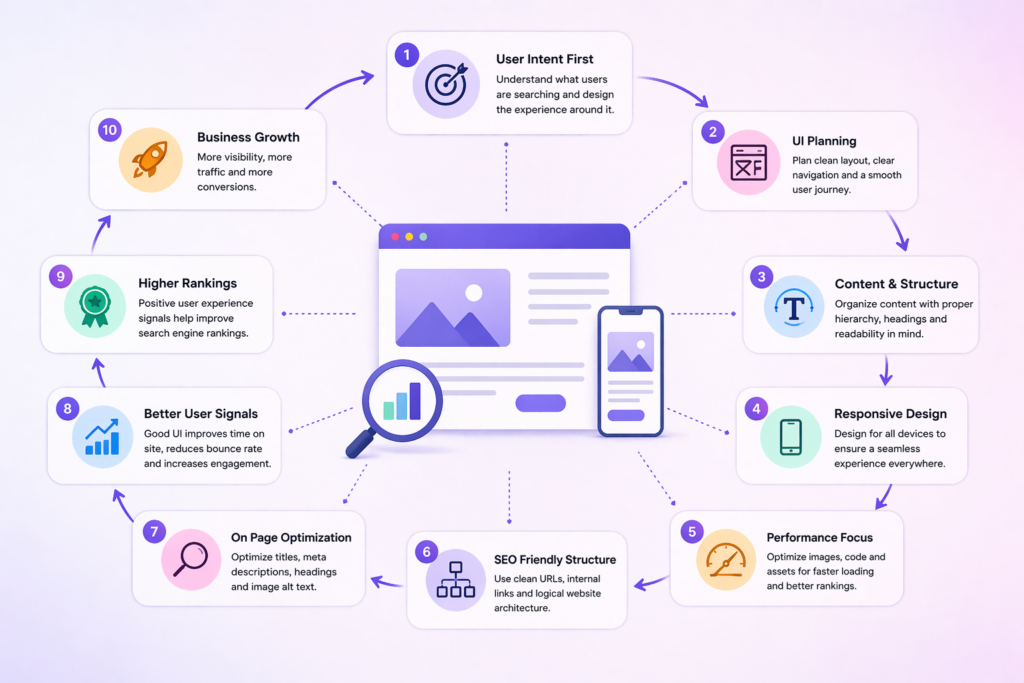
Search engines are not only reading your content. They are also measuring how users interact with your website. If users leave quickly, do not click, or struggle to navigate, it sends negative signals. Good UI improves user experience and that directly supports SEO performance.
First impression and engagement
The design of your website creates the first impression. Clean layout, readable text, and proper spacing make users stay longer. When users spend more time on your site, it increases engagement. This helps reduce bounce rate and improves overall site quality signals.
Page speed and performance
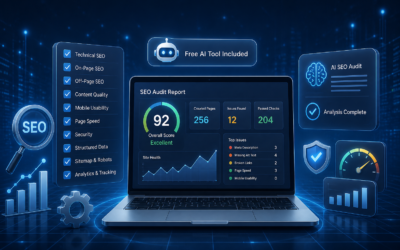
UI decisions directly impact your SEO audit performance and results. Heavy images, complex animations, and poorly structured layouts are common issues found during a website SEO audit. These problems slow down your site, increase bounce rates, and negatively affect rankings.
A proper SEO audit checklist always includes performance analysis because speed is a critical ranking factor. A good design is not just about visuals, it must balance design with performance. Using optimized images, clean code, and lightweight layouts improves loading speed, enhances user experience, and strengthens your overall SEO performance.
Mobile responsiveness
Most users visit websites on mobile devices. If your design is not responsive, users will leave. Search engines also prioritize mobile-friendly websites. A responsive UI ensures that your content is accessible and easy to use on all screen sizes.
Navigation and structure
Good UI makes navigation simple and clear. Users should find what they are looking for without confusion. Clear menus, logical page structure, and internal linking help users move through the site easily. This also helps search engines understand your website better.
Content readability
Even the best content will fail if it is hard to read. UI plays a big role in content presentation. Proper headings, font size, spacing, and contrast improve readability. When users can easily scan and understand content, they are more likely to stay and interact.
Conversion and user journey
SEO brings users to your website, but UI turns them into customers. Clear buttons, simple forms, and proper call to action guide users toward taking action. A strong user journey improves conversions and makes your website more effective.
Conclusion
UI and SEO are not separate parts of a website. They work together to create a complete experience. A successful website is not just about ranking or design alone. It is about combining both to attract users, keep them engaged, and guide them toward action.